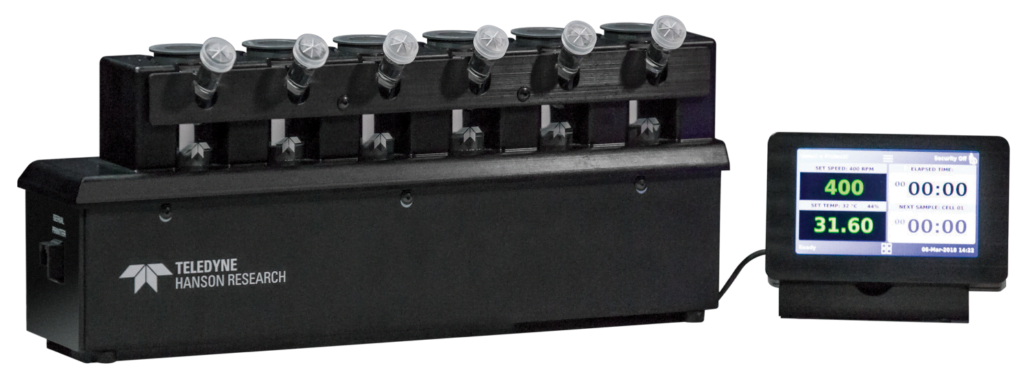

We proudly present Teledyne Hanson’s Phoenix™ Dry-Heat Diffusion Systems: a new benchmark in in vitro diffusion testing. Designed for precision, scalability, and compliance with international standards, these systems are ideally suited for IVRT and IVPT workflows as outlined by both the EMA guideline and FDA guidance. The Phoenix platform includes:
In vitro diffusion testing plays a vital role in the evaluation of topical and transdermal pharmaceutical products. These models provide a reliable and ethically sound method to assess in vitro release testing (IVRT) and in vitro permeation testing across synthetic membranes or biological barriers like human or animal skin.
Both the European Medicines Agency (EMA) and the U.S. FDA recognize the relevance of standardized in vitro methods for establishing bioequivalence, especially when clinical trials are impractical or ethically challenging. The EMA guideline on the quality and equivalence of topical products highlights IVRT and IVPT as key tools in product development and regulatory approval.
This method focuses on the release rate and quantity of active pharmaceutical ingredients (APIs) from a semi-solid formulation, typically into a synthetic membrane or hydrophilic receptor medium. It is especially useful for creams, gels, ointments, and other semi-solid dosage forms. The method supports:
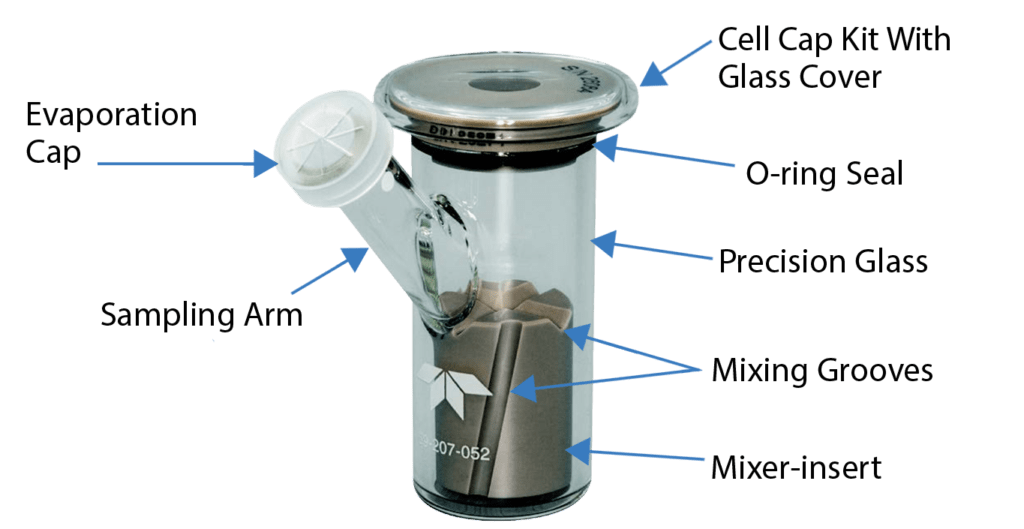
The Phoenix Diffusion Cells and Phoenix DB-6 system offer precise temperature control and ease of sampling, enabling high-fidelity IVRT results in line with EMA guidelines.
This method goes one step further by assessing the actual absorption of the API through excised skin tissue. It’s an indispensable technique for understanding dermal drug delivery and establishing therapeutic equivalence for locally acting formulations.
The Phoenix RDS Automated Diffusion System, with capacity for up to 24 cells, ensures robust and scalable IVPT workflows. It supports time-dependent permeation profiling with:
This method is commonly applied in the development of topical corticosteroids, NSAIDs, antifungals, and cosmetic actives.
Both must comply with ICH Q2(R1) guidelines on method validation. Essential parameters include:
Teledyne Hanson’s Phoenix DB-6 and RDS systems meet these demands through:
Whether you’re conducting product development, quality control, or regulatory submission testing, in vitro diffusion testing provides critical insights into product performance. By aligning your processes with EMA and FDA guidelines, you ensure the reliability and credibility of your data.
Teledyne Hanson’s Phoenix™ systems combine scientific rigor with operational efficiency, making them the preferred choice for pharmaceutical and cosmetic laboratories worldwide.
Contact us to learn more about our advanced solutions for diffusion testing, method validation, and regulatory support.